Pet issues used to feel like a small part of HOA management.
Not anymore especially in California.
For many HOA managers, dog complaints are now one of the most common sources of resident conflict. The questions are no longer just, “Can we tell people to pick up after their dogs?”
Now managers are asking attorneys about emotional support animals, service animals, dog waste fines, leash enforcement, breed restrictions, dangerous dogs, outdated CC&Rs, selective enforcement, and whether the association can be exposed to legal claims if it handles the situation wrong.
Below are the questions HOA managers are actually asking attorneys right now.
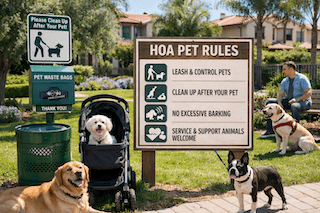
1. Can an HOA still restrict pets?
Yes, but the word that matters is reasonable.
Most HOAs can still regulate pets through their CC&Rs, rules, and enforcement policies. Common restrictions may include: HOA Pet Rules by State
- Number of pets per household
- Leash requirements in common areas
- Dog waste cleanup rules
- Barking and nuisance rules
- Aggressive animal rules
- Common area restrictions
- Registration requirements
But in California, HOAs generally cannot completely ban an owner from keeping at least one pet. That means boards need to be careful when writing rules that feel like regulation but operate like a ban.
2. Can an HOA ban certain dog breeds?
This is one of the most sensitive questions.
Some communities still have older CC&Rs or rules that restrict certain breeds. However, breed restrictions become risky when the animal is a service animal or emotional support animal.
For normal pets, an HOA may have more room to regulate. For assistance animals, the board needs to be much more careful.
The better attorney-approved approach is often to focus on behavior instead of breed.
Instead of saying:
“Pit bulls are prohibited.”
A better rule may focus on:
- Aggressive conduct
- Biting
- Lunging
- Repeated off-leash violations
- Failure to control the animal
- Documented nuisance behavior
That gives the HOA a cleaner enforcement path.
3. Can an HOA deny an emotional support animal?
This is where Board of Directors may get into trouble. See links for guidance.
https://www.davis-stirling.com/HOME/S/Service-Support-Animals
ADA Complaint
https://calcivilrights.ca.gov/housing/
Emotional support animals are not treated like regular pets when they qualify under fair housing laws. That means an HOA usually cannot deny the animal simply because the community has a no-pet rule, breed limit, weight limit, or pet fee policy.
But that does not mean the owner gets unlimited freedom.
An HOA may still require the animal to be controlled, leashed where required, non-aggressive, and cleaned up after.
The key is this:
The HOA should focus on conduct, documentation, and safety — not emotion, suspicion, or frustration.
4. Can an HOA ask for proof of an emotional support animal?
Yes, but only within limits.
What an HOA CAN Ask For
If the disability and need for the animal are not obvious, the HOA can generally request:
- Documentation that the resident has a disability recognized under fair housing laws.
- Documentation that the ESA helps alleviate symptoms or effects of that disability.
- Confirmation from a licensed healthcare professional or other reliable third party familiar with the resident’s condition.
The HOA does not need to simply accept a verbal statement without supporting information when the need is not apparent.
What an HOA CANNOT Ask For
An HOA generally should not request:
- Detailed medical records.
- Specific diagnosis information.
- Treatment plans.
- Medication information.
- Access to a resident’s healthcare provider.
- Information unrelated to the accommodation request.
The HOA is entitled to determine whether a reasonable accommodation is warranted—not to conduct a medical investigation.
HOA boards and managers should not ask for full medical records, private diagnosis details, therapy notes, or unnecessary personal information.
A reasonable accommodation request should be handled carefully, consistently, and privately.
This is one of the questions where managers should involve legal counsel early because one sloppy email can create a fair housing problem.
5. Can an HOA charge pet fees or deposits for damage caused by service animals or emotional support animals?
Yes
If the animal causes actual damage. The HOA may be able to pursue the owner for damage caused by the animal, depending on the governing documents and applicable law.
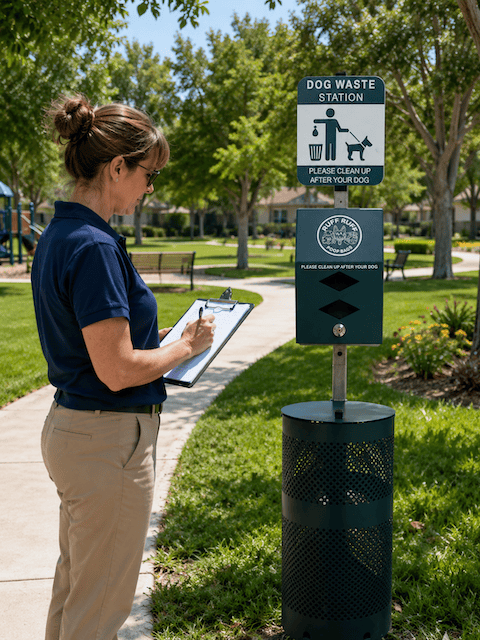
6. Can an HOA still require dog waste cleanup?
Yes.
This is one of the clearest areas for HOA enforcement.
Even when an animal is a service animal or emotional support animal, the owner or handler is generally still responsible for cleaning up after it.
A strong pet waste rules should explain:
- Where cleanup is required
- Who is responsible
- Where waste should be disposed
- What evidence is needed for enforcement
- What fines apply after proper notice and hearing
7. Can an HOA fine residents for dog poop? California, an HOA can generally fine residents for failing to pick up dog waste if all of the following are true:
1. The HOA Has Authority in the Governing Documents
The authority usually comes from:
- CC&Rs
- Rules & Regulations
- Operating Rules
- Fine Schedule
Most California HOAs already have nuisance provisions or pet rules that require owners to clean up after pets.

2. The HOA Follows the Davis-Stirling Enforcement Process
Before imposing a fine, California HOAs generally must:
- Provide notice of the alleged violation.
- Give the owner an opportunity for a hearing before the board (or disciplinary committee if authorized).
- Allow the owner to respond.
- Notify the owner of the board’s decision.
Failure to follow this process can invalidate the fine.
3. The HOA Has Evidence
This is where most dog poop enforcement breaks down.
HOA attorneys frequently advise boards that they need reasonable evidence linking the violation to a specific owner.
Examples:
- Security camera footage
- Photos or videos
- Witness statements
- Manager observations
- Resident complaints with supporting evidence
The board should be able to explain why it believes a particular owner violated the rule.
4. Enforcement Must Be Consistent
One of the biggest legal risks is selective enforcement.
Example:
❌ Fine Owner A for dog poop.
❌ Ignore Owner B for the same conduct.
That can create challenges to enforcement and complaints of unequal treatment.
HOA attorneys routinely advise boards to apply pet rules uniformly.
5. Service Animals and ESAs Are Not Exempt
A common misconception is: “My dog is an emotional support animal, so the HOA can’t fine me.”
That’s generally not true.
Even if a dog is:
- A service animal
- An emotional support animal
- A reasonable accommodation
The owner is still typically responsible for:
- Picking up waste
- Leash compliance
- Controlling the animal
- Preventing nuisance behavior
The HOA is regulating conduct, not the disability.

What HOA Attorneys Are Seeing More Often
Many California communities are exploring:
Dog DNA Programs
The HOA requires:
- Dog registration
- DNA cheek swab
- Testing of uncollected waste
The goal is to identify which dog left the waste.
Before implementing these programs, attorneys typically recommend reviewing:
Enforcement procedures
Authority under the governing documents
Privacy concerns
Rule adoption requirements
The safest enforcement programs usually combine clear rules, strong signage, consistent documentation, proper notice, and a fair hearing process.
9. Can an HOA require dogs to be leashed in common areas?
Yes, leash rules are one of the most important pet safety rules an HOA can adopt.
Common areas create shared risk. A dog that is friendly at home may behave differently around children, bikes, strollers, delivery drivers, other dogs, or older residents.
A good leash rule should apply to:
- Greenbelts
- Sidewalks
- Courtyards
- Parking lots
- Clubhouse areas
- Parks
- Trails
- Dog relief areas
- Other shared common areas
The rule should also explain that dogs must be under control at all times.
10. What if the dog is a service animal? ADA Complaint
https://calcivilrights.ca.gov/housing/
Service animals are highly protected, but they are not exempt from basic behavior and safety rules.
The HOA should not treat a service animal as a regular pet, but it may still enforce reasonable rules related to:
- Waste cleanup
- Aggressive behavior
- Excessive barking
- Damage to common areas
- Loss of control
- Direct threats to health or safety
The board should be careful not to punish the disability-related use of the animal. The focus should stay on actual conduct.
11. Can an HOA remove a dangerous dog?
If a dog bites, attacks, lunges, threatens residents, or repeatedly escapes control, the HOA should document the issue carefully and involve legal counsel.
The board may need to coordinate with:
- Animal control
- The association’s attorney
- Insurance
- The property manager
- The affected residents
- The dog owner
This is where vague enforcement can backfire. A dangerous dog issue needs a clean paper trail.
12. Can an HOA enforce old CC&R pet restrictions?
CC&Rs should be reviewed before enforcement.
Many communities have pet rules written years ago, before today’s fair housing standard/, emotional support animal issues, and state pet ownership protections became common.
https://calcivilrights.ca.gov/housing/
Old documents may include language that is outdated, unclear, too broad, or difficult to enforce.
HOA managers should flag older pet provisions for attorney review if they include:
- Total pet bans
- Broad breed bans
- Weight limits
- Vague nuisance language
- No clear fine process
- No accommodation procedure
- No dog waste enforcement language
- No common area leash rules
13. Can an HOA manager handle pet disputes without involving the board?
Managers need to be careful here.
HOA managers usually do not make policy. They help the board implement the governing documents and board decisions.
A manager can gather facts, send notices, coordinate hearings, and document complaints. But major decisions about enforcement, legal action, rule changes, or accommodation requests should involve the board and legal counsel when needed.
14. What pet rules should every HOA review this year?
Every HOA should review these areas:
- Pet ownership limits
- Leash requirements
- Dog waste cleanup rules
- Common area restrictions
- Barking and nuisance language
- Dangerous dog procedures
- Emotional support animal process
- Service animal process
- Fine schedule
- Hearing procedure
- Evidence requirements
- Dog waste station placement
- Signage
- Vendor responsibilities
- Maintenance responsibilities
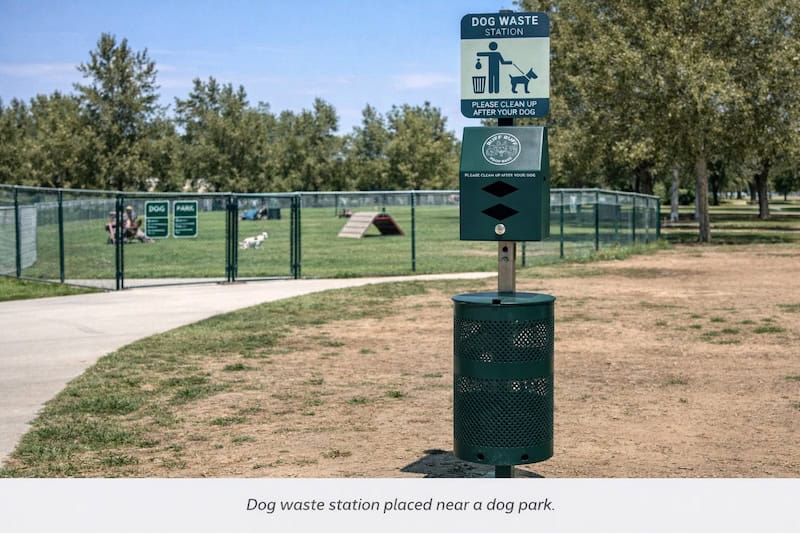
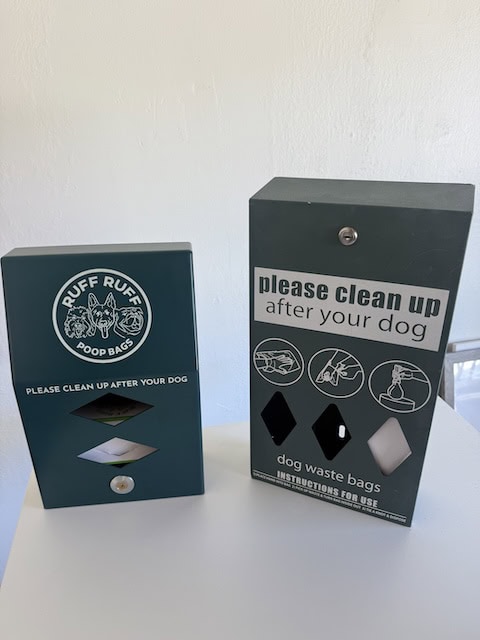
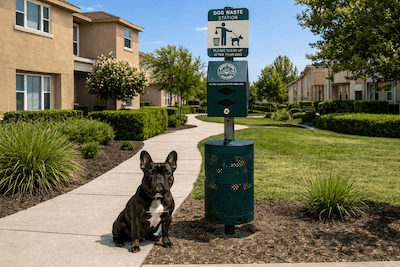
15. Where do dog waste stations fit into the legal picture?
Dog waste stations are not just a convenience item.
For HOA managers, they help support enforcement.
When an HOA provides clearly placed dog waste stations, it becomes easier to show that the community gave residents a reasonable way to comply with cleanup rules. Complete Guide to Dog Waste Stations
Good dog waste station placement can reduce: HOA Dog Waste Station Placement Guide
- Resident excuses
- Common area complaints
- Landscape damage
- Board frustration
- Manager follow-up time
- Repeated violation emails
For larger communities, townhome associations, master-planned communities, and coastal California HOAs, dog waste stations are part of the management system.
The rule is easier to enforce when the tools are already in place.
Practical Takeaway for HOA Managers
Pet rules are not going away.
In many communities, they are becoming more complicated because boards are dealing with normal pets, emotional support animals, service animals, dog waste complaints, leash issues, safety concerns, and outdated CC&Rs at the same time.
The best HOA pet policy is not the strictest policy.
It is the clearest, most enforceable, most consistently applied policy.
That means:
- Clear rules
- Proper attorney review
- Strong documentation
- Fair enforcement
- Good signage
- Practical dog waste stations
- Consistent communication with residents
When HOAs make compliance easy, enforcement becomes easier too.
Reference Links:
https://www.davis-stirling.com/HOME/S/Service-Support-Animals