Why Proper Dog Waste Stations, Bags, and Systems Matter
Dog waste is often treated as a minor nuisance — an unpleasant but unavoidable part of shared outdoor spaces. In reality, unmanaged dog waste is a public-health, environmental, and infrastructure issue that affects communities far beyond aesthetics.
For cities, HOAs, and property managers, professional dog waste management systems are no longer optional. They are a necessary component of maintaining clean parks, protecting water quality, and reducing liability.
This guide explains why dog waste matters, how it impacts public health, and what effective dog waste management actually looks like.
What Is Dog Waste Management?
Dog waste management refers to the systems, products, and processes used to collect, contain, and properly dispose of canine waste in public and shared spaces.
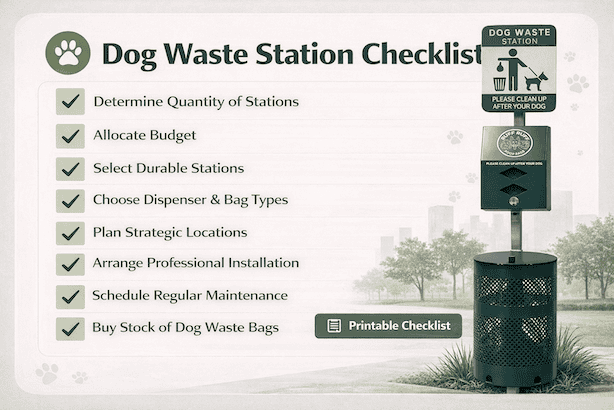
A complete dog waste management solution typically includes:
- Strategically placed dog waste stations
- Durable dog waste bags or commercial roll bags
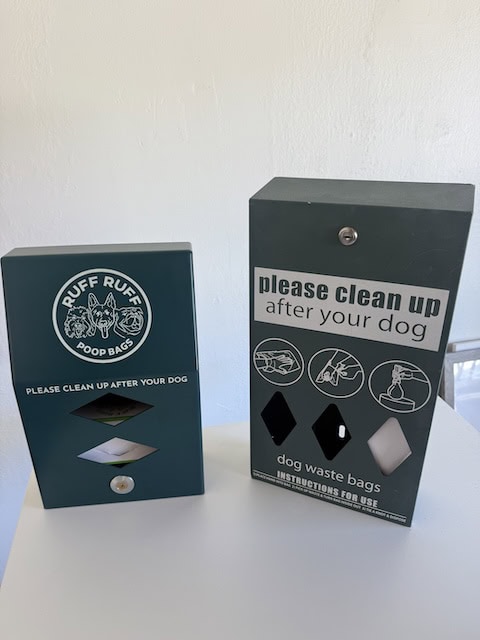
- Weather-resistant bag dispensers
- Clear signage and education
- Regular servicing and refilling
- Accountability and route tracking
Without these systems, compliance drops — and problems rise.
Why Dog Waste Is a Public-Health Issue
1. Dog Waste Contains Harmful Bacteria and Parasites
Dog feces can carry pathogens such as:
- E. coli
- Salmonella
- Giardia
- Roundworms and hookworms
These organisms can survive in soil for weeks or months. When left in parks or common areas, they increase the risk of illness for:
- Children playing on grass or playgrounds
- Pets sniffing or stepping in contaminated areas
- Adults exposed through shoes, hands, or runoff
This makes unmanaged dog waste a legitimate public-health concern, not just an inconvenience.
2. Stormwater Runoff Spreads Contamination
Uncollected dog waste does not stay where it is left.
Rain, sprinklers, and irrigation wash waste into storm drains, which in many municipalities flow directly into local waterways without treatment.
This leads to:
- Elevated bacteria levels in creeks and rivers
- Environmental health warnings
- Increased monitoring and remediation costs
Properly stocked dog waste stations with accessible bag dispensers reduce contamination at the source.
3. Nutrient Pollution Harms Ecosystems
Dog waste contains high levels of nitrogen and phosphorus. When these nutrients enter water systems, they can:
- Fuel algal blooms
- Reduce oxygen levels
- Harm or kill fish and aquatic life
Even small, repeated inputs from unmanaged dog waste can degrade ecosystem health over time. Professional dog waste programs help prevent this cumulative damage.\
4. Shared Public Spaces Increase Exposure Risk
Public parks, trails, and HOA common areas are designed for shared use. When dog waste is left behind:
- Exposure risk increases for everyone
- Complaints rise
- Trust in park maintenance declines
Providing commercial dog waste stations with reliable dog waste bags helps maintain clean, usable spaces without constant enforcement.
5. Antibiotic-Resistant Bacteria Is an Emerging Threat
Research shows dog waste can contain antibiotic-resistant bacteria, which are harder to treat and pose long-term risks to public health.
Reducing the amount of waste left in public spaces is one way communities can limit the spread of these organisms.
Why Signs Alone Don’t Work
Many properties rely on:
- “Please pick up after your dog” signs
- Occasional bag availability
- Infrequent servicing
These approaches fail because they rely on behavior without support.
Effective dog waste management is about systems, not reminders.
When bags are empty, stations are broken, or locations are inconvenient, compliance drops — regardless of signage.
What an Effective Dog Waste Management System Includes
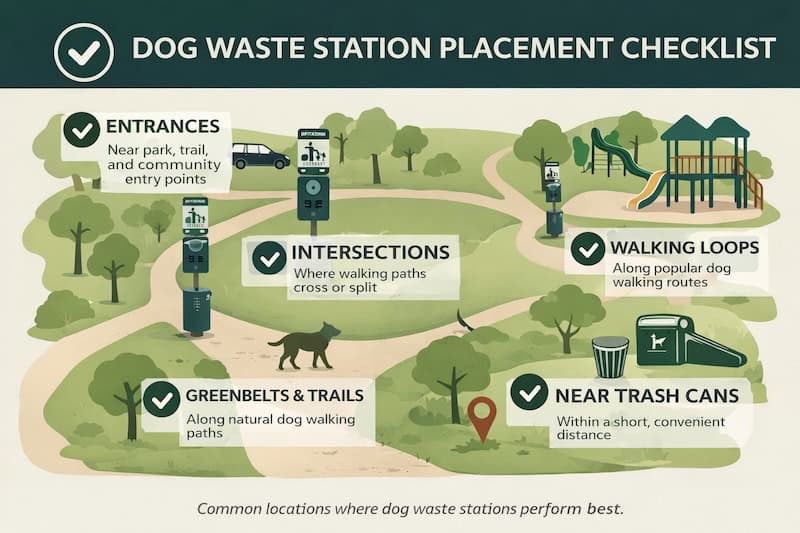
Strategically Placed Dog Waste Stations
Stations should be:
- Visible
- Convenient
- Located near entrances, trails, and high-traffic areas
Poor placement leads to underuse.
High-Quality Dog Waste Bags
Commercial environments require:
- Thick, leak-resistant bags
- Proper sizing for commercial dispensers
- Compostable or recycled material options where appropriate
Cheap bags tear, leak, and discourage use.
Reliable Bag Dispensers
Bag dispensers must be:
- Weather-resistant
- Lockable
- Compatible with standard commercial roll bags
Broken or empty dispensers undermine the entire system.
Routine Servicing and Refilling
Consistency matters more than frequency.
Effective programs include:
- Scheduled refills
- Inventory tracking
- Route audits
- Documentation
This transforms dog waste management from guesswork into infrastructure.
Earth-Friendly Dog Waste Solutions
Modern dog waste programs increasingly use:
- Compostable dog waste bags (ASTM-compliant)
- Recycled post-consumer resin bags
- Reduced-plastic packaging
These earth-friendly dog waste solutions help communities reduce landfill impact while maintaining durability.
Sustainability only works when performance is not compromised.
Benefits of Professional Dog Waste Management
Cities, HOAs, and property managers that implement professional systems experience:
- Fewer resident complaints
- Cleaner parks and trails
- Reduced liability
- Improved public perception
- Better environmental outcomes
Most importantly, they create spaces people enjoy using.
Dog Waste Management for Cities, HOAs, and Parks
Different environments require different approaches:
- Cities: scalability, data tracking, public accountability
- HOAs: resident satisfaction, aesthetics, consistency
- Parks & Trails: durability, visibility, environmental protection
A one-size-fits-all approach rarely works.
Clean Parks Don’t Happen by Accident
Clean, healthy public spaces are the result of:
- Intentional design
- Reliable infrastructure
- Consistent service
Dog waste management may not be glamorous — but it is foundational.
At Ruff Ruff Poop Bags, we believe dog waste systems should work quietly, reliably, and professionally — protecting public health without drawing attention to themselves.
Ready to Improve Dog Waste Management in Your Community?
If you manage parks, HOAs, or shared spaces, a professional dog waste management system isn’t a luxury — it’s a responsibility.
Clean parks are engineered.
Clean parks are maintained.
Clean parks build trust.