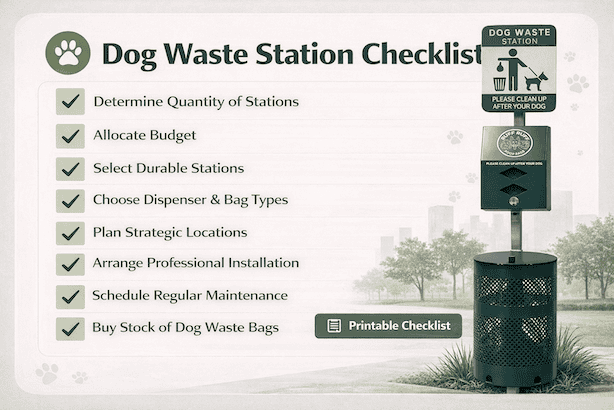
A dog waste station in the wrong place may look fine and still fail. A dog waste station in the right place may get used consistently and reduce complaints fast.
Placement is one of the biggest factors in whether a station program actually works. This guide covers where to place dog waste stations and the mistakes that make them easy to ignore.
Why Placement Matters
Dog owners usually make cleanup decisions in real time. If the bag dispenser is visible and convenient, usage often improves. If it is hidden, too far off route, or placed after the moment of need, compliance drops.
The best station placement supports behavior instead of fighting it.
For the full overview, read our Complete Guide to Dog Waste Stations for Parks, HOAs, and Cities
Guide to Dog Waste Stations for Parks, Dog Waste Station Complaints, and Cities].
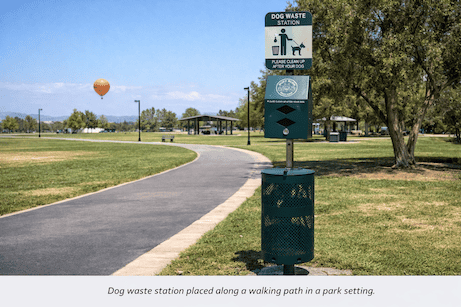
Best Places to Install Dog Waste Stations
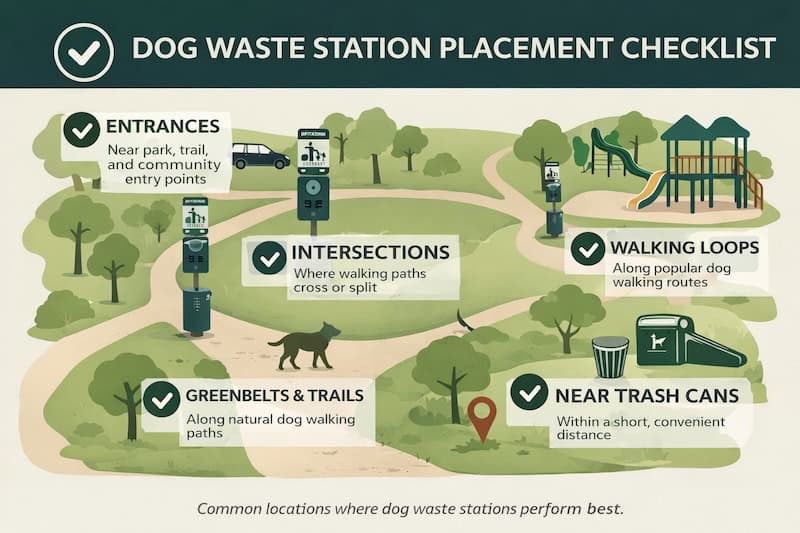
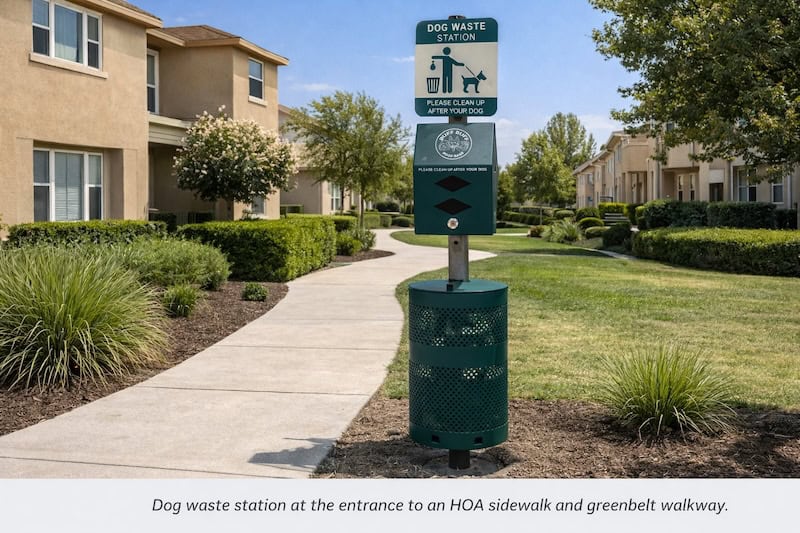
Near Entrances
Good entry-point locations include:
- park entrances
- HOA gates
- apartment walk-in paths
- parking lot access points
- trailheads
These locations work because people can grab a bag before the walk starts.
Along Natural Dog Walking Routes
Place stations where dog owners already walk, not where installation is easiest.
Strong route-based locations include:
- sidewalks bordering common areas
- trail intersections
- loop paths
- greenbelt walkways
- path turns and route splits
Near Repeat Problem Zones
If your team keeps finding dog waste in one part of the property, that location deserves attention.
Common problem zones include:
- perimeter fences
- landscaped edges
- open lawn borders
- corners of common areas
- areas near playground buffers
- routes between parking and residential units
Near Existing Trash Access
A bag dispenser works better when there is a disposal option close enough to be practical.
Without a nearby trash plan, you may end up trading one problem for another: tied bags left along the route.
Places to Avoid
Hidden or Low-Visibility Spots
Avoid placing stations:
- behind shrubs
- behind monument signs
- in deep landscaping
- around blind corners
- where parked cars block visibility
Areas With No Walking Logic
Do not place stations in empty spots just because the ground is easy to install into. Usage depends on foot traffic, not installation convenience.
Locations Too Close Together
Too many stations clustered in one small area can waste budget while leaving the rest of the property uncovered.
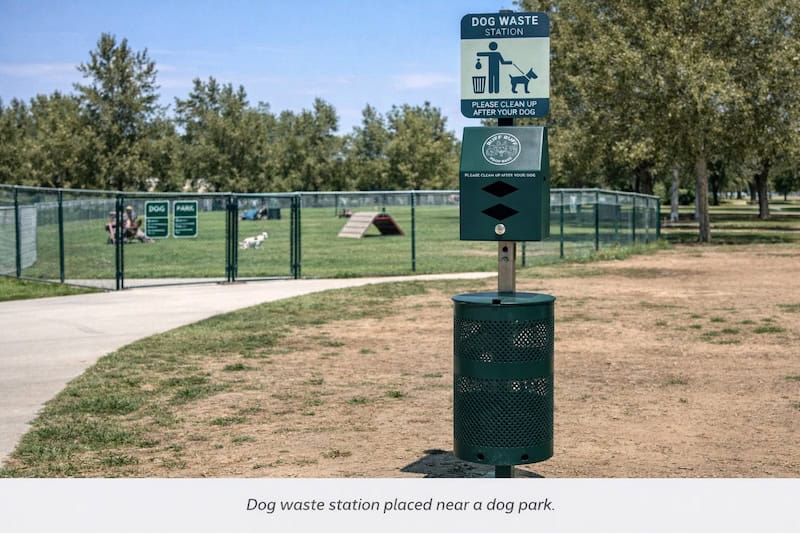
How Far Apart Should Dog Waste Stations Be
There is no fixed universal distance. The right spacing depends on layout, density, and dog traffic.
As a rule, spacing should feel natural to the dog walker. People should encounter stations often enough that grabbing a bag feels easy, not inconvenient.
Smaller sites may only need one or two. Larger parks and HOA systems may need several spread across entrances, walkways, and complaint zones.
Placement Questions to Ask Before Installing
Ask these before finalizing locations:
- Where do most dog walks begin
- Where do people slow down or change direction
- Where are complaints happening now
- Where is waste commonly found
- Where is the nearest trash can
- Can the station be seen from the path
- Is the location easy for staff to service
If you cannot answer these, you are guessing.
Common Placement Mistakes
- placing stations only at the main entrance
- ignoring repeat complaint zones
- putting stations where trees or shrubs block them
- forgetting to pair placement with disposal access
- spacing stations based on aesthetics instead of usage
- installing stations after the moment a bag is needed
Final Thoughts
Station placement should follow real behavior, not a site map alone.
The best dog waste station locations are visible, logical, easy to use, and easy to service. When placement is right, stations may reduce complaints and make cleanup more consistent without adding unnecessary operational friction.
Next, read our Dog Waste Station Maintenance Checklist and Dog Waste Station Costs Guide to turn placement into a working system.