HOA pet rules are rarely “one-size-fits-all.” What your association can regulate depends on three layers that apply in every U.S. state:
- Your governing documents (CC&Rs, bylaws, rules) — the contract owners bought into. CA DOJ
- Federal fair-housing and disability laws — especially when the animal is a service animal or other “assistance animal.” Hud.gov
- Your state HOA statutes — usually about process (notice, hearings, rulemaking, fines), not the pet rules themselves. CAI For State Guidelines
This guide explains what’s generally enforceable across the U.S., what’s commonly unenforceable (or risky), and how to write pet-waste rules that actually reduce complaints instead of inflaming neighbors.
The short version: what most HOAs can regulate (in all states)
Across the U.S., HOAs typically can regulate behavior and impacts tied to pets, as long as the rules are adopted correctly and applied consistently:
- Leash rules and control in common areas
- Noise/nuisance (barking, aggressive behavior, repeated disturbances)
- Waste cleanup requirements
- Pet registration (for accountability and emergency contact)
- Use restrictions (where pets can/can’t go: pools, playgrounds, clubhouse, etc., subject to disability law)
- Reasonable limits on number of pets, size/weight, or species (more common in condos), depending on your CC&Rs and state requirements for adopting/amending restrictions
The CAI article you linked is directionally right that HOAs can adopt pet rules via their governing documents and that municipal rules don’t automatically apply to HOAs the same way. Pet Rule and What to Do
What often becomes unenforceable (or legally risky)
1) Blanket “no pets” bans (sometimes allowed, often a fight)
Some communities still have “no pets” language, especially older condos. But enforcement can be limited by:
- State statutes (California is the big example — see below)
- Fair housing accommodations (service animals / assistance animals can override “no pets” policies)
2) Breed bans and “dangerous breed lists”
Many HOAs attempt breed restrictions, but they’re increasingly controversial and often challenged as:
- poorly drafted (“aggressive breeds” without definitions)
- inconsistently enforced
- conflicting with insurance realities
- vulnerable if they collide with disability accommodation rules (you generally can’t deny a legitimate assistance animal based on breed stereotypes)
The CAI article’s California-specific reasoning about breed bans is widely cited, but it’s not a universal rule across the U.S.
3) Anything that conflicts with disability accommodation rules
This is the biggest area where HOAs get burned.
- Service animals (ADA definition): dogs trained to perform tasks for a disability (and in some cases miniature horses in certain contexts).
- Assistance animals in housing (Fair Housing lens): broader category that can include emotional support animals, depending on the disability-related need. HUD’s guidance emphasizes case-by-case analysis, and denial must be based on an actual, individualized issue (direct threat/property damage) that can’t be mitigated.
Translation: “No pit bulls” or “no dogs over 25 lbs” can’t be used as a shortcut to deny a legitimate disability accommodation.
The two state-level exceptions that matter most right now
California: “At least one pet” protection (in many communities)
California Civil Code §4715 generally prevents governing documents from prohibiting an owner from keeping at least one pet, subject to reasonable rules.
The CAI article you shared discusses this California-specific framework. https://www.davis-stirling.com/HOME/Statutes/Civil-Code-4715
Florida: specific statute on emotional support animal (ESA) requests
Florida has a detailed ESA statute (F.S. §760.27) that spells out what housing providers can request and how multiple ESAs may be handled, among other items.
If you manage Florida associations, this is one of the rare examples where state law gets very specific about ESA documentation mechanics.
“All states” — how to quickly check what’s true where you live
State laws change, and most of them are about how an HOA adopts/enforces rules (notice, open meetings, hearing requirements, fine procedures), not whether you can require poop pickup.
Use this state-by-state tracker to find the current statutes that govern community associations in your state:
What to look for in your state’s statutes:
- rulemaking procedure (board authority vs membership vote)
- due process requirements before fines/suspensions
- limits on fines or enforcement tools
- requirements to publish rules / distribute notices
- dispute resolution requirements (internal dispute resolution, mediation, etc.)
Then cross-check with federal disability requirements for animals in housing.
The pet issue HOAs underestimate: waste complaints are an operations problem, not a rule problem
Most “pet drama” starts as pet waste + repeat offenders, not the rulebook.
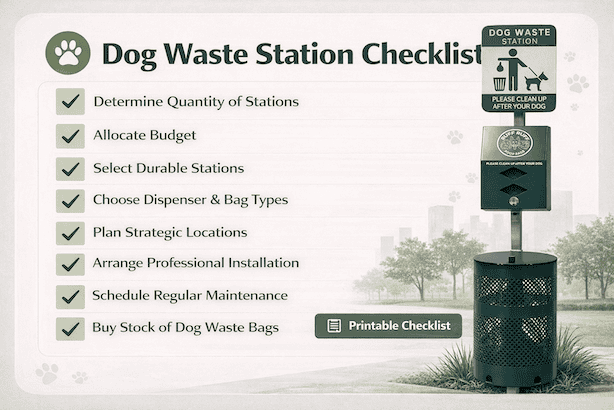
If you want fewer resident emails and fewer board blowups, build an “easy compliance system”:
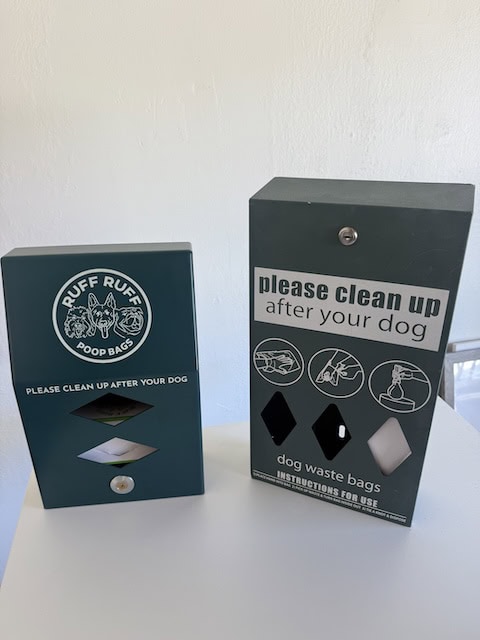
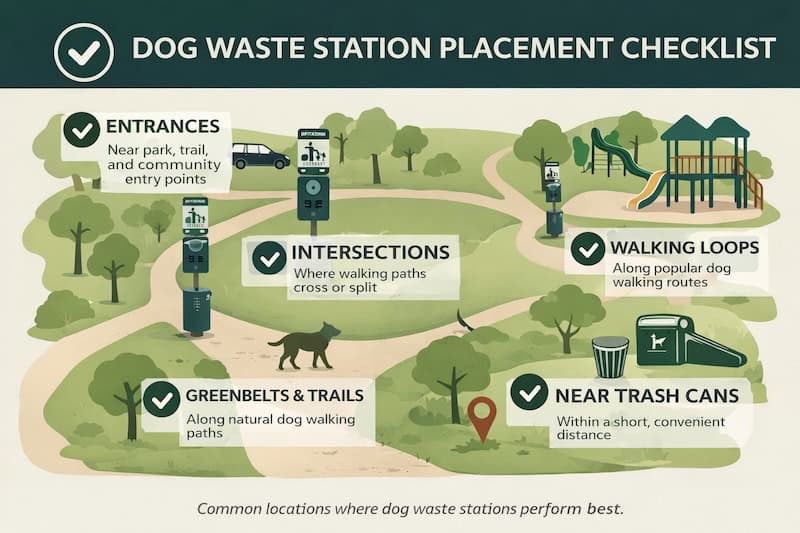
1) Put Commercial Dog Waste Stations where people actually walk
Dog owners don’t detour 200 yards for a commercial dog waste bag. Place stations:
- at trailheads
- near mail kiosks
- by park exits
- at high-traffic corners of common areas
2) Keep bags stocked like it’s a safety supply
The fastest way to create non-compliance is an empty dispenser.
Simple standard: check weekly (or more in high-use areas) and refill before you run out.
3) Enforce against behavior, not “pet owners”. CTA!
Rules that work are objective:
- “Waste must be picked up immediately”
- “Failure to pick up = documented violation + escalating fine schedule”
- “Repeat violations trigger hearing”
This is where a durable commercial dog waste station + reliable commercial dog waste bag supply becomes the practical enforcement backbone.
Sample HOA pet-waste rule language (copy/paste)
Pet Waste Cleanup (Common Areas & Limited Common Areas)
All residents, guests, and pet handlers must immediately pick up and properly dispose of pet waste in all common areas and limited common areas. Pet waste may be disposed of only in designated trash receptacles.Failure to Comply
Failure to pick up pet waste is a violation subject to enforcement, including notices, hearings where required, and fines under the Association’s enforcement policy.Documentation
Violations may be documented by staff, vendors, or resident reports with supporting evidence (photos/video where available), consistent with applicable law and the Association’s due process procedures.
Operational add-on (recommended):
The Association will maintain commerical dog waste stations in designated areas and keep them stocked to support compliance.
Can an HOA ban dogs?
Sometimes — it depends on the CC&Rs and state law. Even where “no pets” rules exist, disability accommodations can override them for service/assistance animals.
Can an HOA enforce breed or weight limits?
Often yes (if properly adopted and not discriminatory), but it becomes legally risky when it conflicts with disability accommodation requests and when enforcement is inconsistent.
Can an HOA deny an emotional support animal?
Only under limited, evidence-based circumstances (e.g., the specific animal poses a direct threat or would cause significant property damage that can’t be mitigated).
Where do I find my state’s HOA laws?
Start with CAI’s state-by-state “laws and resources” index and then confirm on your state legislature site. https://www.caionline.org/advocacy/state-laws-and-resources
Here site citations and resources to help.
https://www.hud.gov/helping-americans/assistance-animals
https://www.caionline.org/advocacy/state-laws-and-resources
https://www.davis-stirling.com/HOME/Statutes/Civil-Code-4715
https://www.ada.gov/resources/service-animals-2010-requirements