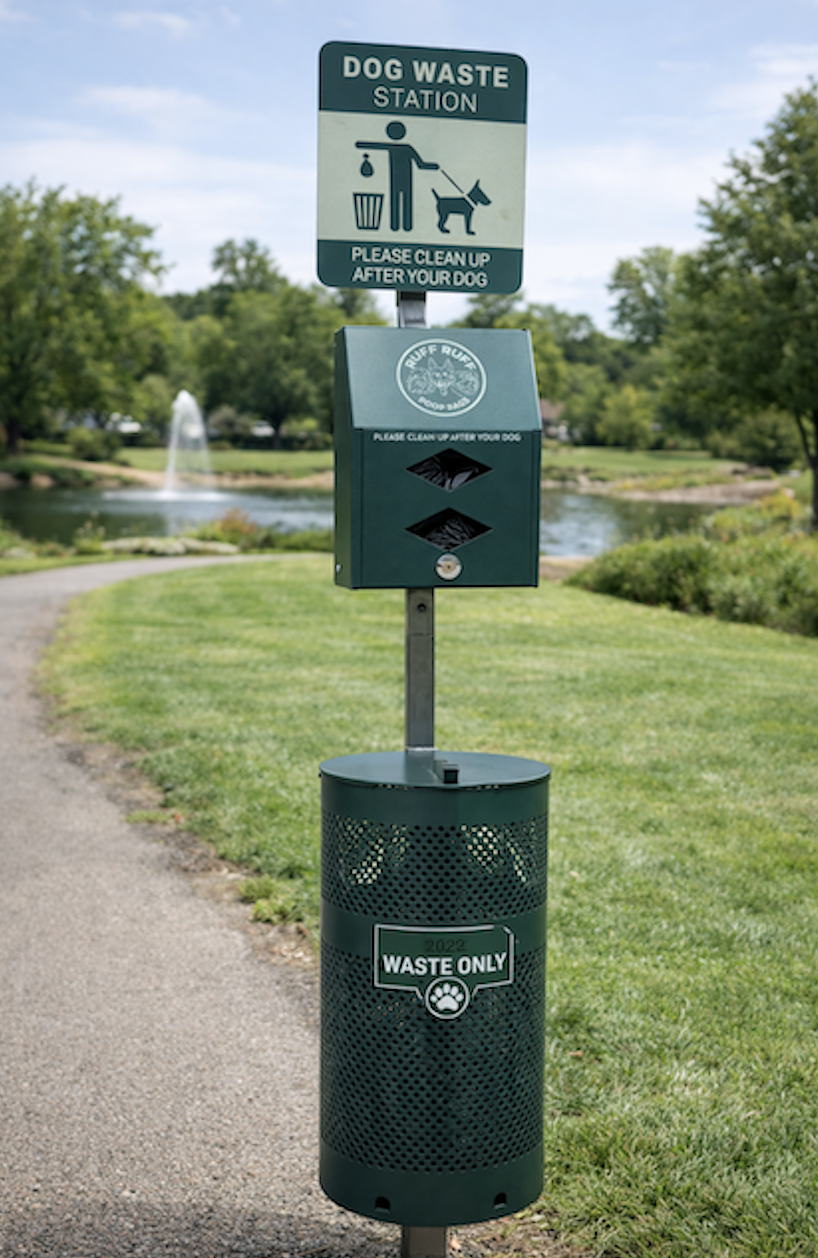
Dog waste stations rarely fail because of the pole.
They fail because of the door and hinge system.
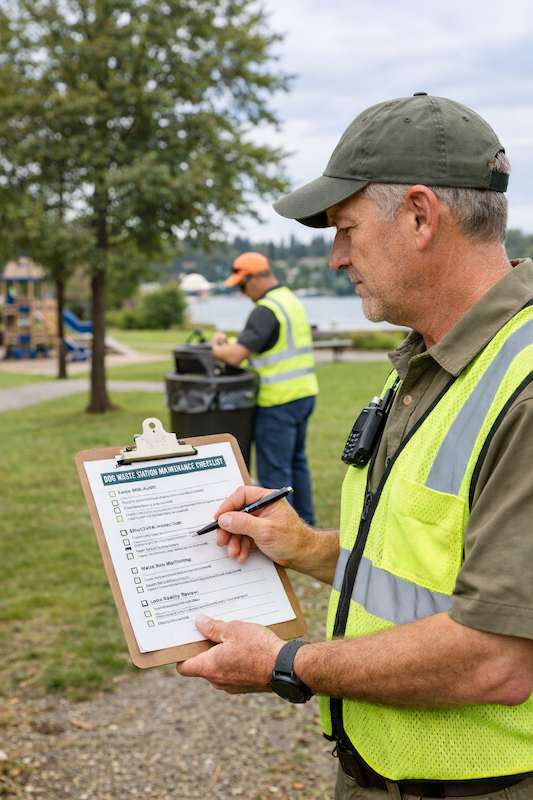
Across city parks, HOA walking paths, and public trail systems, maintenance teams report the same issue repeatedly. The station structure may still be standing, but the dispenser door bends, the hinge corrodes, or the latch fails. Once that happens, the station becomes difficult to refill and eventually stops functioning altogether.
For park departments and property managers, this creates a predictable cycle of replacement.
Understanding why dog waste stations fail can help cities and HOAs install equipment that lasts significantly longer.

The Most Common Failure Point in Dog Waste Stations
Many commercial dog waste stations use thin metal doors with small riveted hinges. These components are exposed to constant environmental stress:
- Sun and UV exposure
- Rain and coastal air
- Frequent opening and closing
- Vandalism or heavy public use
Over time, these conditions cause hinges to weaken and doors to bend. Once the hinge fails, the entire pet waste station dispenser becomes difficult to operate.
Maintenance crews often find themselves replacing the entire dispenser even though the pole and structure are still intact.
This is one of the biggest hidden costs of municipal dog waste stations.
Why Cheap Dog Waste Stations Fail Quickly
When cities or HOAs install a commercial dog waste station, purchasing decisions often prioritize upfront cost instead of long-term durability.
Lower-cost stations frequently use:
- Thin sheet metal doors
- Riveted hinges
- Low-grade hardware
- Minimal weather protection
These design choices reduce manufacturing cost but shorten service life.
In many public parks and community spaces, these stations begin showing wear within 12–24 months.
Common issues include:
- Bent dispenser doors
- Broken hinges
- Rusted hardware
- Jammed bag dispensers
- Doors that no longer close properly
Once these failures start appearing, maintenance crews spend more time servicing or replacing stations.
What a Durable Dog Waste Station Should Include
Cities, park districts, HOAs, and landscape management companies increasingly look for longer-lasting pet waste stations designed for heavy outdoor use.
When evaluating dog waste stations, consider the following features:
Heavy-Gauge Metal Construction
Thicker materials significantly improve durability.
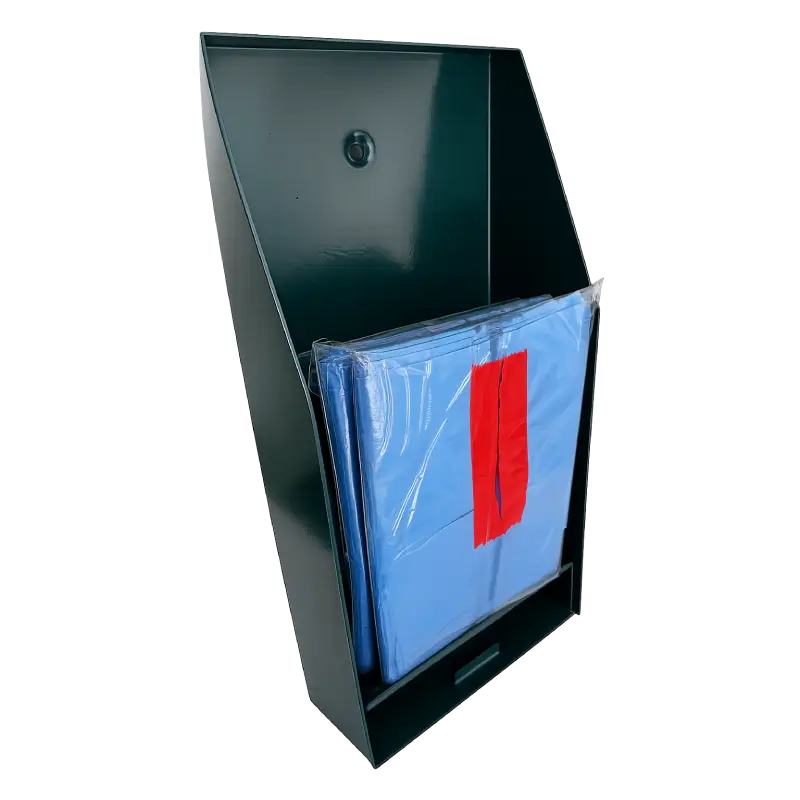
A 13-gauge aluminum dispenser body provides stronger structural resistance than thin stamped metal commonly used in budget stations.
Weather-Resistant Hinge Design
Hinges are the most common failure point.
Stations designed with weather-resistant hinge systems reduce the risk of door bending or corrosion over time.
This simple improvement dramatically increases the lifespan of the dispenser.
Durable Pole Construction
The pole supports the station and must withstand outdoor conditions for years.
Many high-quality stations use steel poles for stability and structural support.
Protective Coatings
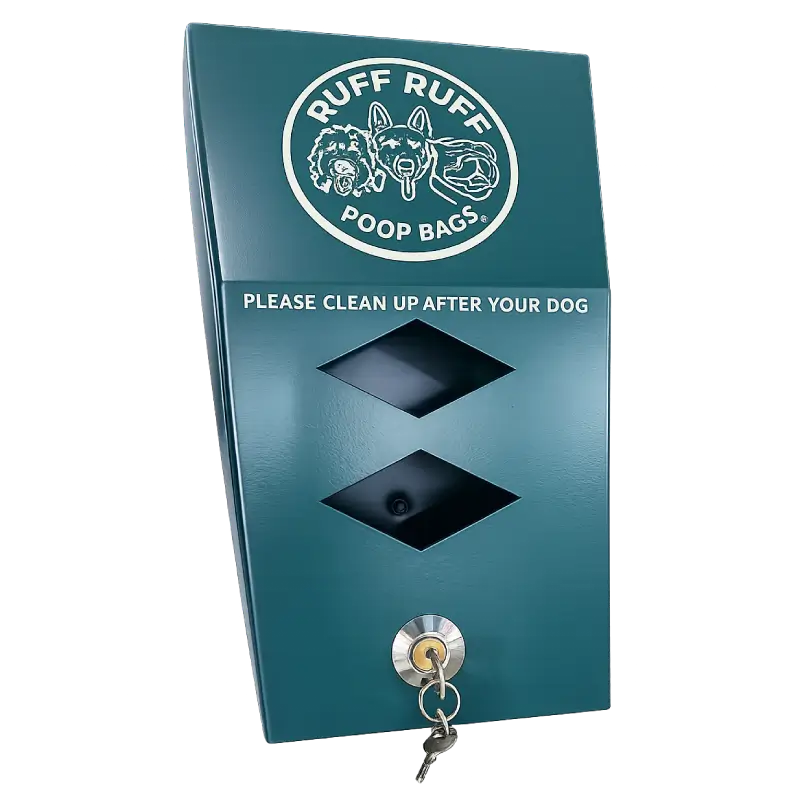
Outdoor equipment should be built with finishes designed for long-term exposure.
Powder-coated hardware helps protect against:
- Rust
- UV degradation
- Moisture damage
These coatings are particularly important in coastal communities and humid climates.
Expected Lifespan of a Quality Dog Waste Station
When properly designed, a commercial dog waste station can remain operational for many years.
High-quality stations used in parks and community trails may last:
8–10 years or longer
This longer lifespan significantly reduces:
- Replacement costs
- Maintenance labor
- Resident complaints
For municipalities managing dozens or hundreds of stations, durability becomes a critical operational factor.
Why Dog Waste Stations Matter for Cities and HOAs
Dog waste stations are more than simple amenities.
They serve as a compliance tool for pet waste ordinances and help maintain public spaces.
Well-maintained stations support:
- Cleaner parks and trails
- Improved resident satisfaction
- Reduced turf damage
- Better public health conditions
When stations fail or remain empty, compliance drops and complaints increase.
Investing in durable equipment helps communities maintain cleaner shared spaces.
Introducing the Ruff Ruff Dog Waste Station
At Ruff Ruff Poop Bags, we designed our dog waste stations specifically for the environments that cause most stations to fail.
Our stations feature:
- 13-gauge aluminum dispenser body
- Weather-resistant hinge design
- Steel pole construction
- Powder-coated hardware
- Built for 8–10+ years of field use
These stations were created for the people who actually maintain parks and community spaces.
The goal is simple: install equipment that works reliably for years, not seasons.
Dog Waste Station Solutions for Parks, HOAs, and Municipalities
If you manage:
- City parks
- Park districts
- HOA communities
- Public trails
Installing durable commercial dog waste stations can reduce maintenance headaches and improve compliance across your property.
Choosing the right station design helps ensure the system works the way it was intended.
Quietly and consistently.
Why the Waste Basket Matters Too
Many dog waste stations fail because the trash receptacle is built with thin metal or lightweight plastic liners that cannot handle outdoor conditions.
In public parks, HOA walking paths, and high-traffic trails, the waste basket is under constant stress from:
- Weather exposure
- Daily public use
- Overflow during peak park seasons
- Maintenance handling during collection
Thin baskets often bend, rust, or deteriorate quickly, creating the same replacement cycle seen with low-quality dispensers.
A durable dog waste station system should include a trash receptacle designed for the same long-term service life as the dispenser.
Structured Waste Baskets Built for Park Use
Our Ruff Ruff dog waste stations include high-quality structured waste baskets built from thicker 202 steel.
This construction provides several advantages for municipalities and HOAs:
- Stronger steel walls that resist bending and deformation
- Better durability under heavy park traffic
- Increased resistance to outdoor weather conditions
- Longer service life compared to lightweight trash bins
These structured waste baskets are designed to handle the real conditions found in:
- City parks
- Public trails
- HOA common areas
- Dog parks
- Multi-family residential communities
By combining a 13-gauge aluminum dispenser body with thicker 202 steel waste baskets, the entire station system is built for long-term durability.
A Complete Dog Waste Station System Built to Last
Many stations are designed as inexpensive catalog products.
We approached it differently.
The Ruff Ruff station system combines:
- 13-gauge aluminum dispenser body
- Weather-resistant hinge design
- Steel pole construction
- Powder-coated hardware
- Thicker 202 steel structured waste baskets
- Designed for 8–10+ years of service life
This combination helps parks departments and HOA managers avoid the cycle of replacing broken dispensers and damaged trash bins every few seasons.
The goal is simple: install equipment once and maintain it, not constantly replace it.
See below and find out more about our new products: Commercial Dog Waste Stations and Dispensers.
https://www.ruffruffpoopbags.com/product-category/dispensers