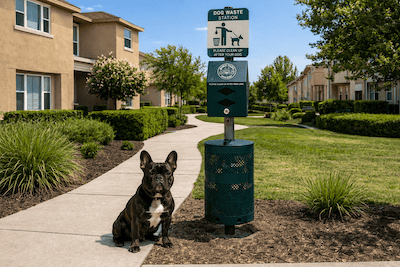
Managing pets in a California homeowners association is about more than deciding where dogs can walk.
For HOA boards and community managers, pet policies can affect resident satisfaction, maintenance budgets, common-area cleanliness, and legal compliance.
Dog waste left on sidewalks, off-leash pets, repeated barking complaints, and disagreements over fines can quickly turn into frustrating disputes between neighbors.
As 2027 approaches, California HOA boards have an opportunity to review their existing rules, clarify expectations, and improve the way pet-related complaints are handled.
Here are five important areas every California HOA should review.
1. Understand California’s Pet Ownership Protections
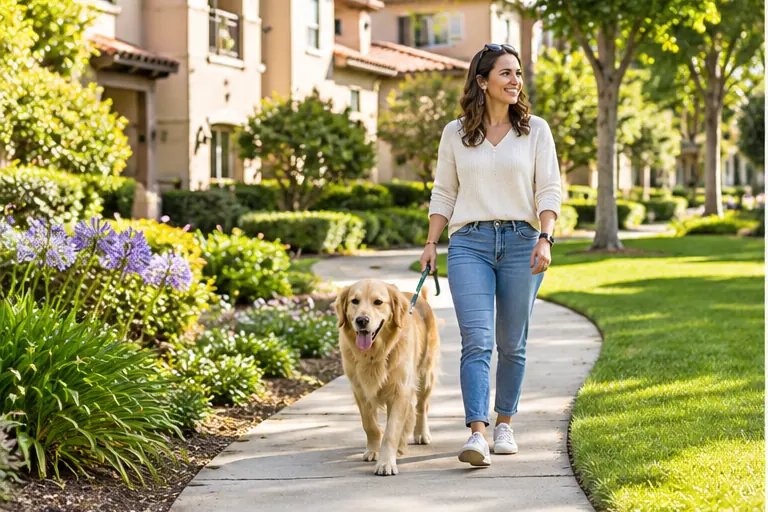
Can a California HOA prohibit residents from owning pets?
Under California Civil Code §4715, qualifying homeowners generally have the right to keep at least one pet, subject to reasonable association rules.
The law defines pets to include domesticated dogs, cats, birds, aquarium animals, and certain other animals agreed upon between the association and homeowner.
Importantly, the law does not automatically guarantee every resident the right to keep an unlimited number of dogs or other pets.
HOAs may have reasonable restrictions, but boards should review those restrictions carefully before adopting new policies.
What HOA boards should review
- Pet-number restrictions and existing governing documents
- Rules regarding animals in shared spaces
- Whether new restrictions affect animals residents already lawfully keep
- Consistency between community rules and California law
Disclaimer: Review outdated pet restrictions with association counsel before sending violation notices or proposing amendments.

2. Clarify Leash Rules and Common-Area Expectations
One of the simplest ways to prevent disputes is to establish clear expectations for dogs using common areas.
Residents should understand where dogs must be leashed, which areas are restricted, and how to report repeated problems.
For example, an HOA may have shared walking trails, landscaped areas, courtyards, or recreational facilities that require different management approaches.
Questions every HOA should ask
- Are leash requirements clearly communicated?
- Are signs posted at important entrances and walking areas?
- Do community rules align with applicable city and county ordinances?
- Are residents aware of designated pet-friendly spaces?
- Is there a consistent process for documenting violations?
Avoid creating rules that are difficult to understand or inconsistently enforced.
Management tip: Include a simple pet-policy summary in resident welcome packets, community newsletters, and annual reminders.
3. Improve Dog Waste Cleanup Rules and Maintenance
Dog waste is not simply a pet-owner issue. It is also a common-area maintenance issue.
When dog waste is repeatedly left on sidewalks, grass, trails, or landscaped areas, HOA managers often receive complaints from residents who expect cleaner surroundings.
An effective dog-waste policy should explain three things:
- Who is responsible for picking up waste
- Where waste must be disposed of
- How violations will be documented and addressed
But written rules are only one part of the solution.
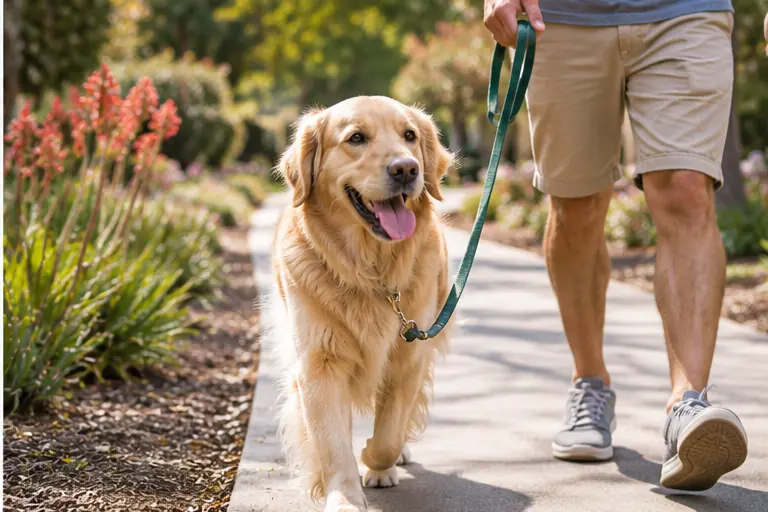
Make cleanup convenient for residents
HOAs should review their existing dog-waste infrastructure before assuming enforcement alone will solve the problem.
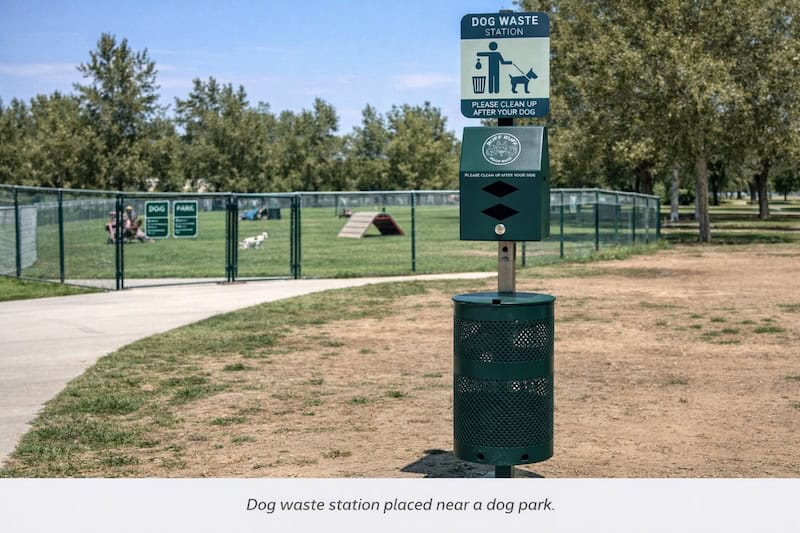
Consider placing dog waste stations near:
- Community walking paths and trail entrances
- Dog-friendly landscaped areas
- High-traffic pedestrian routes
- Common-area entrances and exits
- Other locations where residents regularly walk their dogs
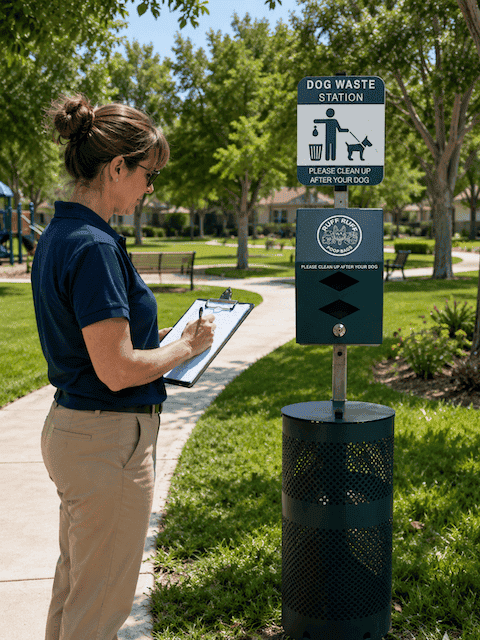
Stations should be stocked with compatible bags and serviced regularly.
A dispenser that remains empty for several days is unlikely to help residents comply with cleanup expectations.
Review your dog waste maintenance budget
Community managers should track:
- Monthly dog waste bag consumption
- Cost per bag and cost per case
- Labor required to refill dispensers
- Trash collection frequency
- Replacement parts and dispenser maintenance
- Resident complaints related to waste
Reviewing these costs can help an association identify inefficient station locations, unnecessary service visits, and purchasing opportunities.
Management tip: Assign responsibility for inspecting and refilling every station. Use a documented maintenance schedule rather than relying on complaints to identify empty dispensers.
For additional guidance, read our Dog Waste Station Placement Guide for Parks, HOAs, and Cities.
4. Handle Assistance Animal Requests Correctly
Assistance animals require special consideration under federal fair-housing law.
According to the U.S. Department of Housing and Urban Development (HUD), qualifying assistance animals are not considered ordinary pets.
This distinction matters because an HOA may need to provide a reasonable accommodation to a resident with a disability, even when the community has existing pet restrictions.
For example, an eligible accommodation request may require an exception to a pet limit or another pet-related restriction.
What community managers should do
- Evaluate accommodation requests individually
- Avoid automatically treating assistance animals as ordinary pets
- Protect residents’ private disability-related information
- Train employees and board members on fair-housing requirements
- Seek legal guidance when requests involve unusual circumstances
Not every requested accommodation must automatically be granted. Applicable fair-housing standards and recognized exceptions still apply.
Management tip: Establish a consistent, confidential process for handling accommodation requests instead of making decisions informally through email discussions among board members.
5. Review HOA Fines and Enforcement Procedures
California made significant changes to HOA monetary penalties in 2025.
Under California Civil Code §5850, as amended by Assembly Bill 130, monetary penalties for governing-document violations generally cannot exceed the lesser of:
- The amount listed in the association’s applicable fine schedule
- $100 per violation
A limited exception permits a higher scheduled penalty when a violation may adversely affect health or safety in the common area or another association member’s property.
Before using that exception, the board must make a written finding identifying the potential adverse impact at a meeting open to members.
Notice, hearings, and opportunities to correct violations
California Civil Code §5855 also establishes procedures associations must follow before imposing discipline.
These include required notice, an opportunity for a hearing, and protections relating to correcting violations.
For example, the statute generally prevents discipline when a member cures the violation before the hearing. It also addresses situations in which correction requires additional time and the member provides a financial commitment to cure.
HOA boards should review the complete statutory requirements rather than assuming that sending a warning letter automatically permits a fine.
What boards should review before 2027
- Current monetary penalty schedules
- Violation notice templates
- Hearing procedures
- Opportunities for residents to correct violations
- Documentation of repeated incidents
- Health-and-safety exception procedures
Management tip: Have association counsel review the fine schedule and enforcement process before implementing changes.
Your California HOA Pet Policy Checklist for 2027
Before the end of the year, HOA boards and community managers should consider completing the following review:
- Review existing pet restrictions against California Civil Code §4715.
- Confirm leash rules and common-area signage.
- Inspect dog waste stations and identify locations needing improvement.
- Review dog waste bag usage and maintenance expenses.
- Train managers on assistance animal accommodation requests.
- Review fine schedules and disciplinary procedures under §§5850–5855.
- Communicate updated expectations to residents.
Better Pet Policies Start With Better Community Management
The goal of an HOA pet policy should not be to create more violations or increase fines.
It should be to establish reasonable expectations, reduce unnecessary conflict, and maintain clean, enjoyable common areas.
For dog-waste complaints in particular, clear rules work best when paired with convenient disposal options and reliable maintenance.
Communities that regularly inspect their dog waste stations, stock appropriate bags, and communicate cleanup expectations can create a more practical system for residents and managers alike.
Make Dog Waste Management Easier With Ruff Ruff Poop Bags
At Ruff Ruff Poop Bags, we help HOAs, property managers, and public works departments manage commercial dog waste supplies.
Our product range includes bulk dog waste bags, dispensers, and complete dog waste stations for shared outdoor spaces.
Whether your association manages a few stations or a larger network across multiple communities, the right supply and maintenance plan can help simplify operations.
Explore our commercial dog waste stations and dispensers or contact our team at nishan@ruffruffpoopbags.com to discuss your community’s needs.
Disclaimer: This article provides general educational information, not legal advice. California HOA requirements depend on applicable law, governing documents, and individual circumstances. Consult qualified association counsel before adopting or enforcing policies.
Legal references
- California Civil Code §4715 — Pet ownership protections
- California Civil Code §5850 — Monetary penalties
- California Civil Code §5855 — Disciplinary procedures
- U.S. Department of Housing and Urban Development — Assistance Animals
- California Assembly Bill 130 (2025)